Inside the Washington, D.C. Commercial Industrial Market
Market Highlights
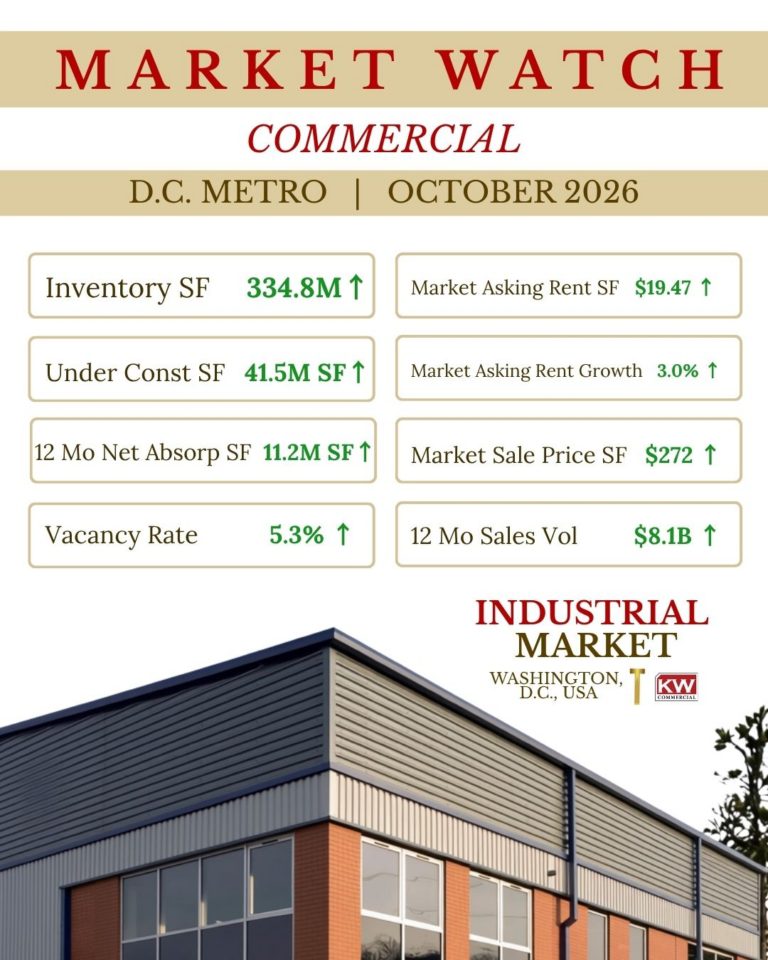
The D.C. Metro industrial market continued to demonstrate strong demand and development activity in October 2026, with 334.8 million square feet of total inventory and 41.5 million square feet under construction, reflecting significant ongoing expansion, particularly in the data center sector.
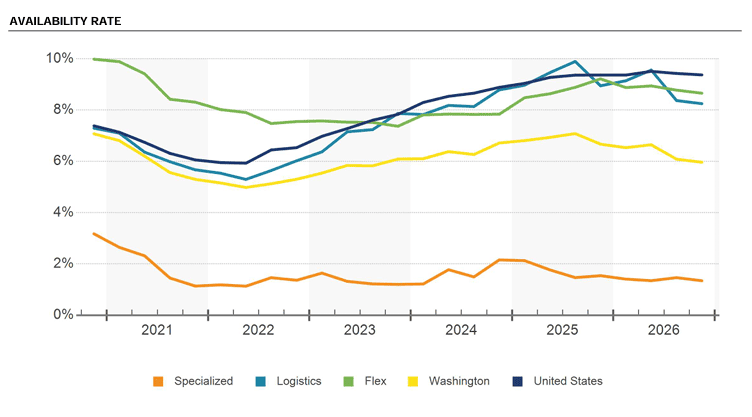
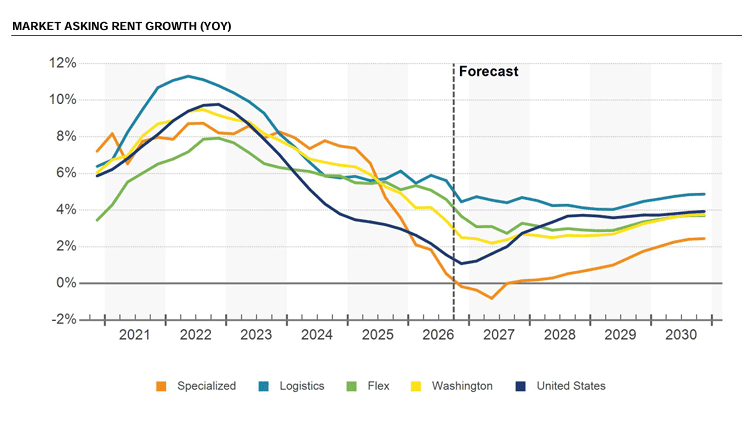
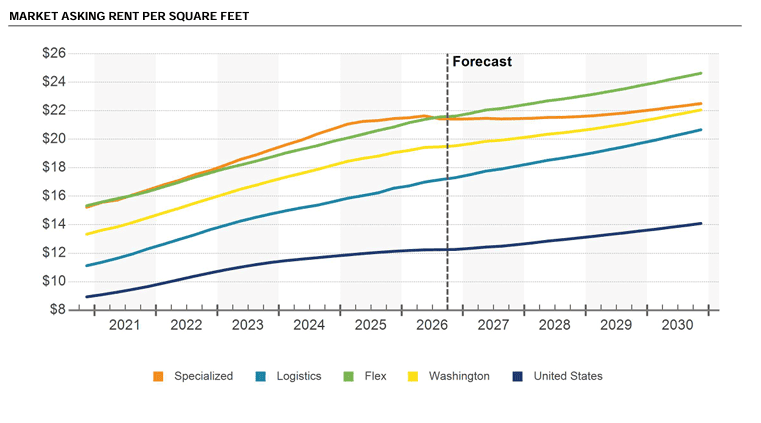
The market asking rent reached $19.47 per square foot, with annual rent growth of 3.0%, outperforming the national growth rate of 1.3%. Meanwhile, the vacancy rate stood at 5.3%, remaining below the national average of 7.2% and indicating relatively tight market conditions despite recent supply additions.
Industrial demand remained positive, with 12-month net absorption totaling 11.2 million square feet, supported by continued activity in logistics and specialized industrial properties. Data centers remain a major driver of demand, particularly across Northern Virginia, where substantial development continues.
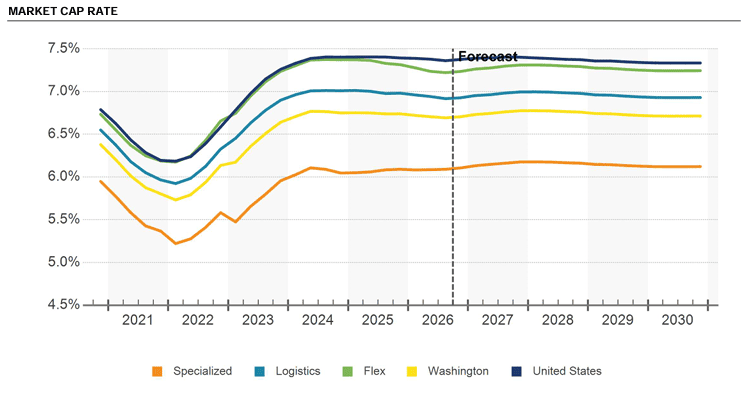
Investment activity remained strong, with the market sale price reaching approximately $272 per square foot and 12-month sales volume totaling $8.1 billion. Overall, the industrial market continues to demonstrate solid leasing fundamentals and investor interest, supported by sustained demand for logistics facilities and data center infrastructure.
Market Outlook
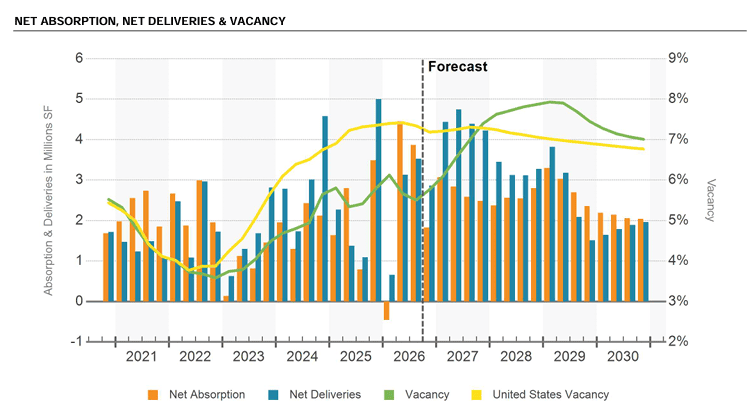
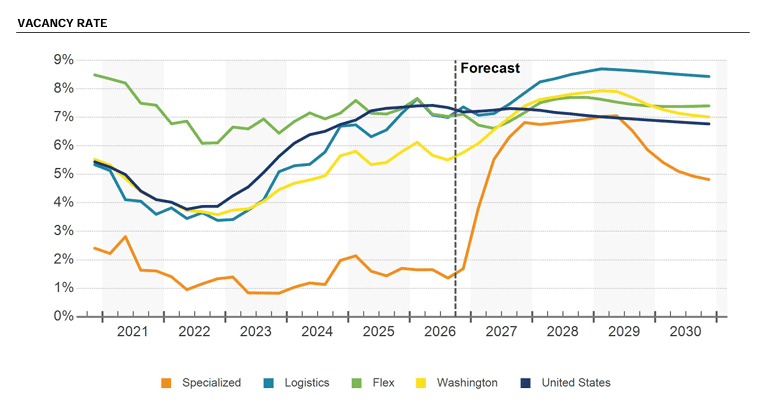
The D.C. Metro industrial market is expected to experience moderate cooling as new supply continues to enter the market. With approximately 41.5 million square feet under construction, vacancy may gradually increase, while rental growth is projected to moderate to 2.5% by the end of 2026.
Demand for data centers and specialized industrial facilities is expected to remain a key market driver, particularly in Northern Virginia. Meanwhile, logistics tenants may benefit from additional space availability, although competition for well-located, smaller industrial properties is likely to remain firm.
Overall, the industrial market remains fundamentally resilient, with positive absorption, continued investment activity, and expanding data center development supporting long-term growth. However, rising supply and shifting tenant demand will require landlords and investors to remain strategic in pricing, leasing, and property positioning.